Glasgow Caledonian Philatelic Society
Glasgow Philatelic Society History
Back to History / Previous Meetings / Past Presidents / Competitions / Polish and Danish Connections
While Britain was still recovering from the effects of World War One and whilst military hospitals were full of wounded soldiers - the year Partick Thistle won the Scottish Cup. – Glasgow philatelic Society came into being. The first meeting of the Glasgow Philatelic Society was held on Monday 15th march 1920 in the Christian Institute (YMCA) 70 Bothwell Street in Glasgow. Mr H Geitner was in the Chair. A committee was set up comprising H Geitner, N G Crawford, R D Sinclair and A McKie. At the 5th meeting on 20th September 1920 H Geitner was elected as Chairman and meetings were to be held on 2nd Monday of the month. The position of President was formalised at the 30h meeting on 13th of October 1924 when A M Orr was elected. Up until then various persons, as available, took the Chair for the meetings. A list of all the past Presidents (and initial Chairmen) is given on the Past Presidents page.
The first meetings were held in the YMCA, 70 Bothwell Street, Glasgow (referred to in minutes as Christian Institute) with a second Exchange meeting at Cranston’s Smoke Room, 17 Regent Street. Over the years a variety of different premises were used. The final meetings were held in Partick Burgh Halls prior to the merger with the Caledonian Philatelic Society.
Over the years the Society has played an important role in the promotion of philately in Scotland. For the most part meetings were held weekly and in the early days alternate meetings were “Exchange” meetings. The 1000th meeting was held on 25th March 1975 in which 16 Past Presidents gave displays (Cover) and the 1500th meeting on 11th March 1995. A Cover was produced for the 55th Anniversary in 1975.
The only breaks in the schedules were during World War II and during the COVID 19 pandemic of 2020 and 2021.
The Society was active in promoting philately and organised and took part in numerous exhibitions including the fascinating “Postal History of Glasgow” display in the Kelvingrove Museum and Art Galleries as part of the GLASGOW 800 celebrations in 1975. (Link). Also of note were the “Stamp of Royalty” exhibition in 1977 for Queen Elizabeth II Silver Jubilee at the People’s Palace, Pride of the Clyde” and displays at the Glasgow Garden Festival. Souvenir covers of some of them are shown below (Links). A more extensive collection of covers, brochures, artwork and pamphlets relating to these various exhibitions is held in the society’s archives.
Strong links were forged with the Polish Philatelic Federation (PZF) and reciprocal visits took place between the Polish city of Lodz and Glasgow. An exhibition of “Polish stamps and Philatelic Material 1960 – 1984”, including exhibits from P.Z.F. Warsaw was held in the McLellan Galleries grom 8th October – 12th October 1984. A reciprocal visit was made to Lodz in 1968 and three members of the Society attended, with 15 displays from Glasgow PS members.
On several occasions the Glasgow Philatelic Society hosted the annual congress of the Association of Scottish Philatelic Societies (ASPS) and souvenir covers are shown below. 1933, 1939, 1952, 1966, 1970 in association with Scophilex,1980 and 1995,
A Centenary Dinner with presentations from Philatelic Societies around Scotland was held on 16th April 2024 in the Glasgow Grosvenor Hotel. The dinner was delayed due to restrictions resulting from the COVID 19 pandemic.
In 2025, due largely to falling membership, Glasgow Philatelic Society decided to merge with the Caledonian Philatelic Society, which was also experiencing the same problem. The new Society is named The Glasgow Caledonian Philatelic Society.
- The Glasgow Philatelic Society Crest
- Anniversary meetings
- Annual Exhibitions
- Clyde’76 and Clyde’77
- Glasgow 800
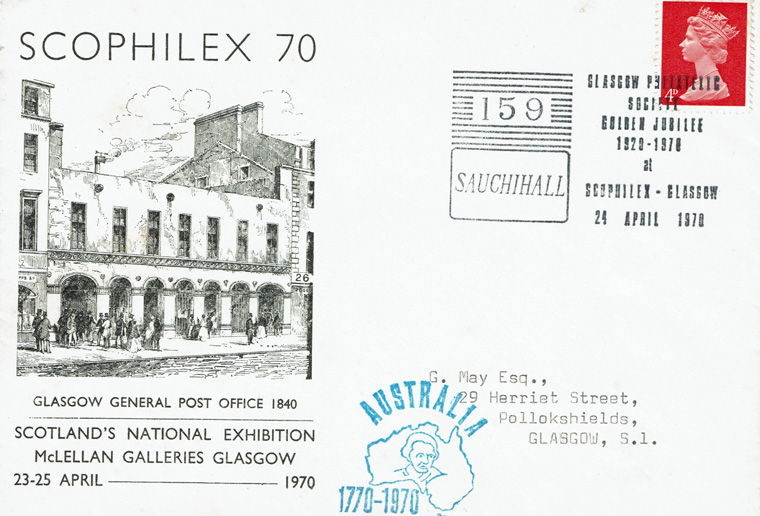
- Scophilex 1970
- Palace of Art 1974
- Museum of Transport
- Pride of the Clyde
- Hosting of ASPS Congress
The Glasgow Philatelic Society Crest
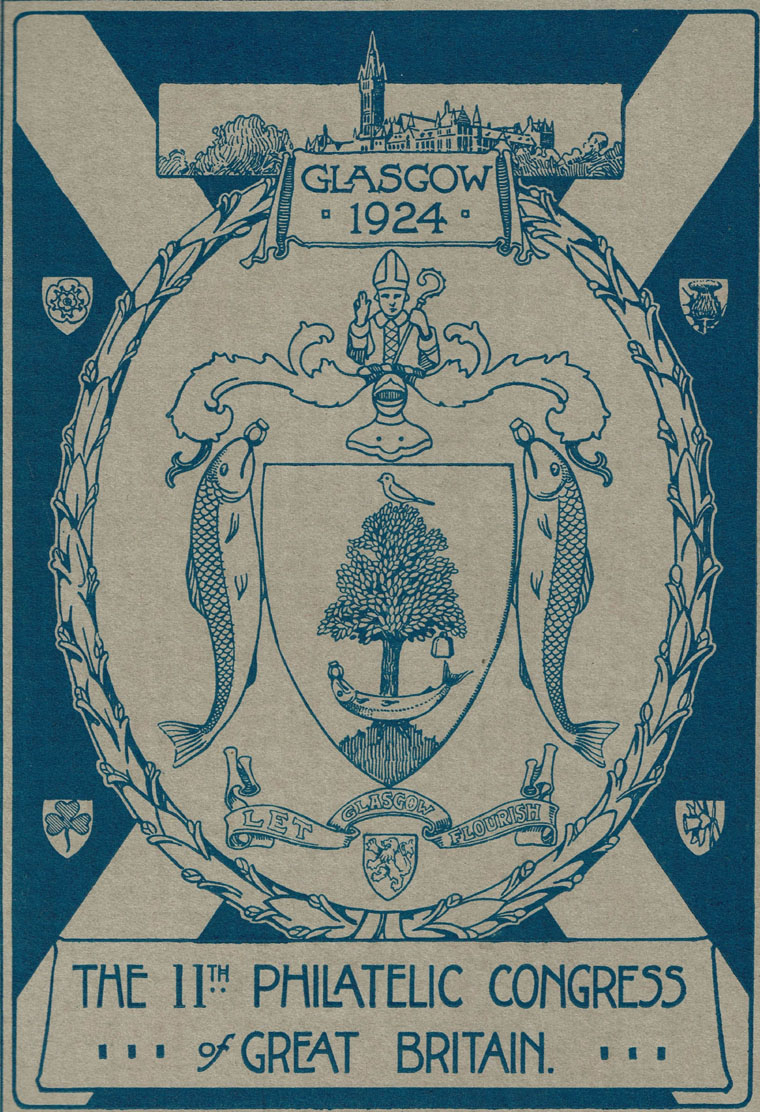
In 1924 it was decided to adopt a Society Crest. A competition, won by Mr J. W. Walker, produced a design that remained in use until 2025. It has been largely adopted, with some minor modifications by Glasgow Caledonian Philatelic Society. It is heavily based on the Crest for the City of Glasgow. The two scans show the Glasgow City crest as used to promote the 11th Philatelic Congress in 1924 and a coloured in depiction of the Crest as used by Glasgow Philatelic Society. The similarity is obvious.
Original sketch of Crest for Glasgow Philatelic Society
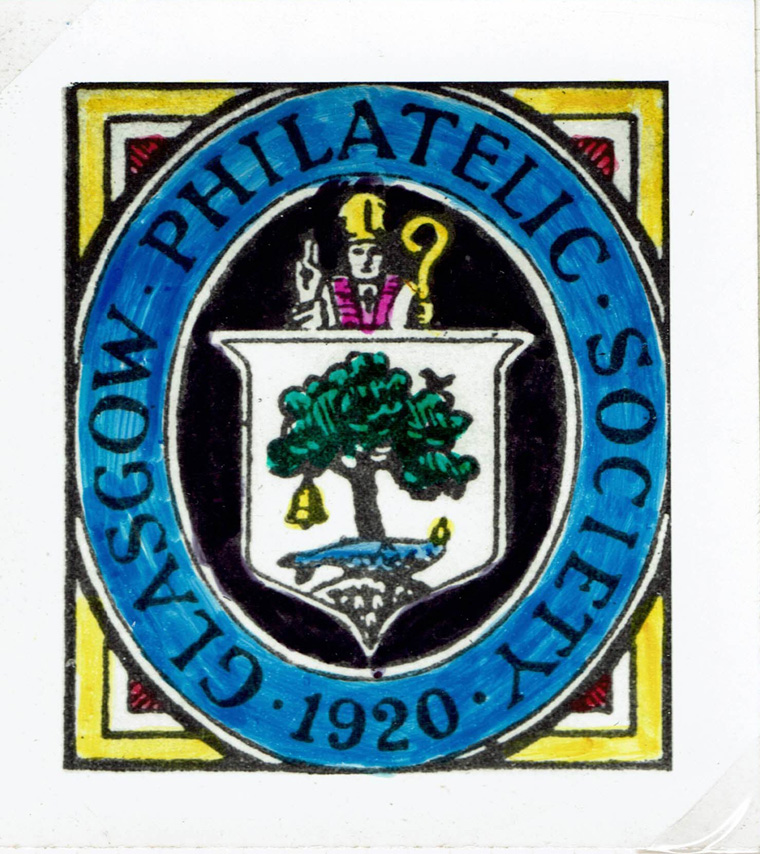
Glasgow City Crest as depicted on Brochure produced for 11th Philatelic Congress of Great Britain
Anniversary Meetings
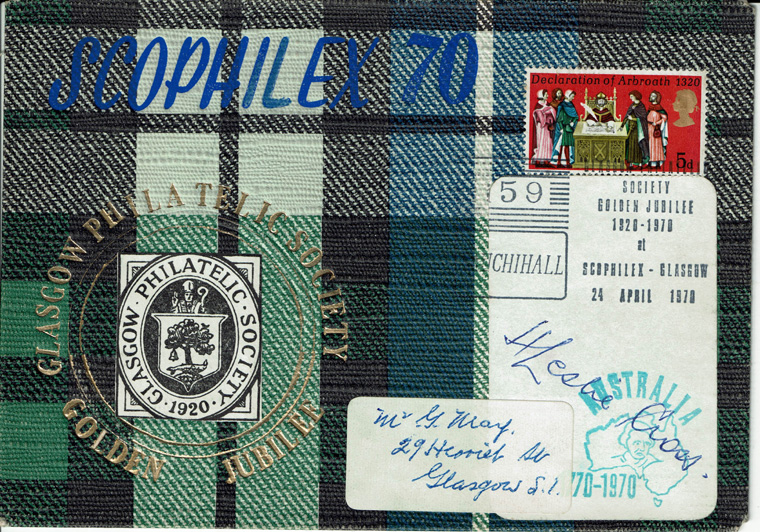
The Golden Jubilee was celebrated in 1970. A special postmark was produced and used on a commemorative cover celebrating the occasion and on a SCOPHILEX Exhibition Cover. Both covers shown also have a cachet commemorating the bicentennial of the “discovery” of Australia by Captain Cook.
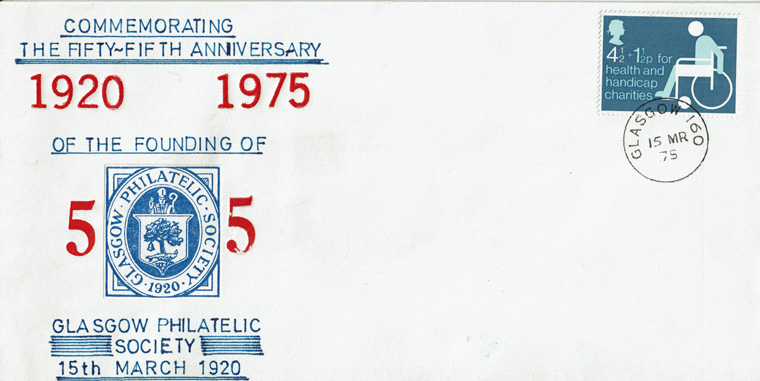
The 55th Anniversary was celebrated on 15th March 1975 and a commemorative cover was produced.
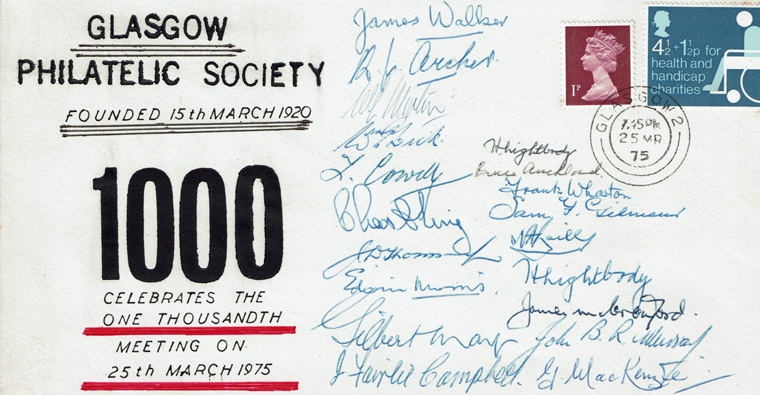
The 1000th meeting of the Society was held on 25th March 1975 and 16 past presidents gave displays. The cover is signed by all of the past presidents as well as the principal office bearers of the society in 1975.
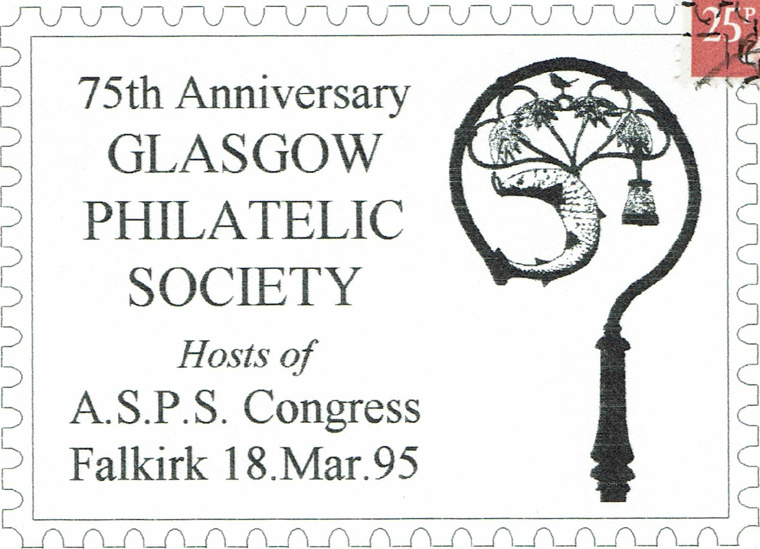
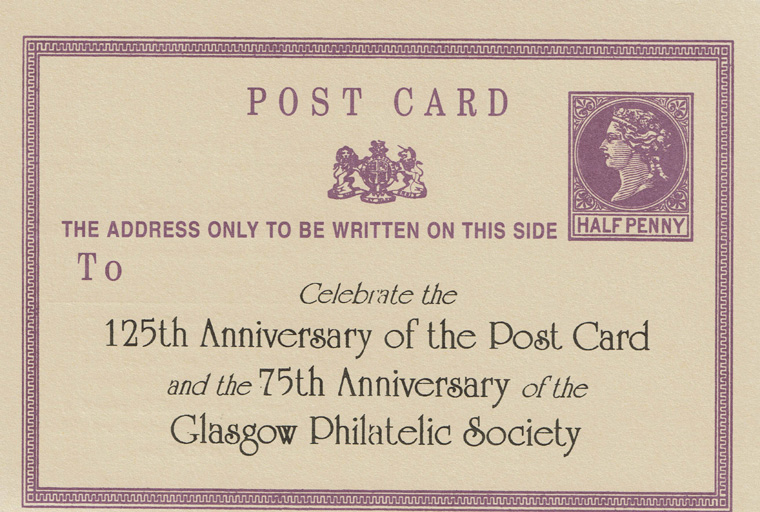
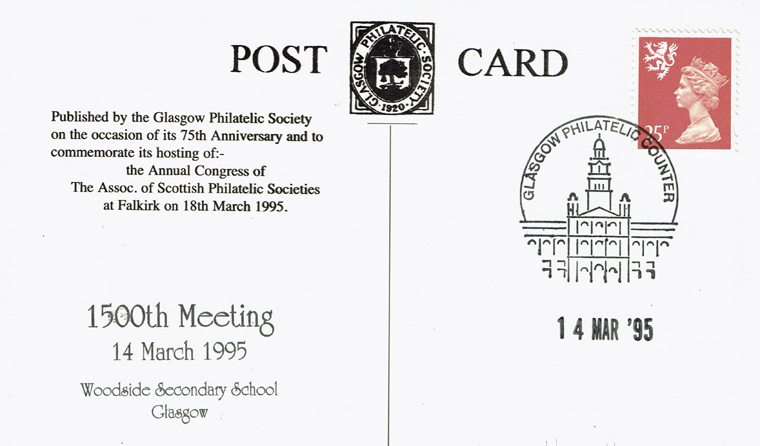
For the 75th anniversary in 1995, the Society hosted the annual Congress of ASPS. As this coincided with the 125th anniversary of the introduction of the Post Card a special card, based on the original card from 1870, was used to invite attendees to the opening ceremony on 18th March.
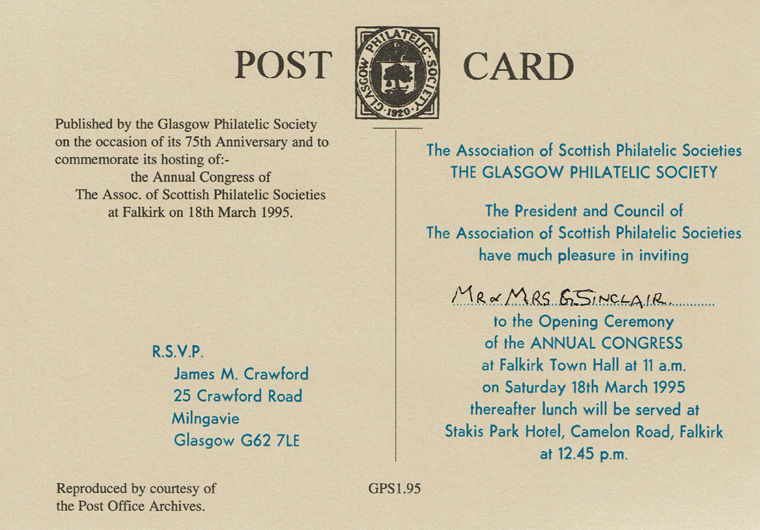
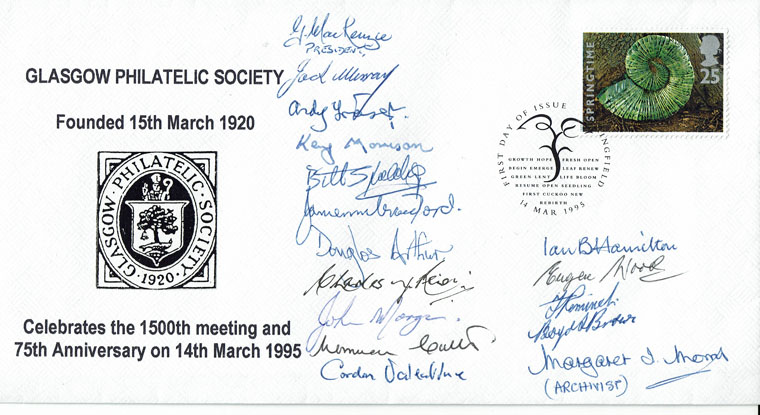
The 1500th meeting took place on 14th March 1995. A second card with a replica of the Post Office Notice introducing Post Cards was produced to be used at the ASPS Congress in 1995.
A dinner to celebrate the Centennial of Glasgow Philatelic Society was held in June 2022 in the Grosvenor Hilton with a card produced.
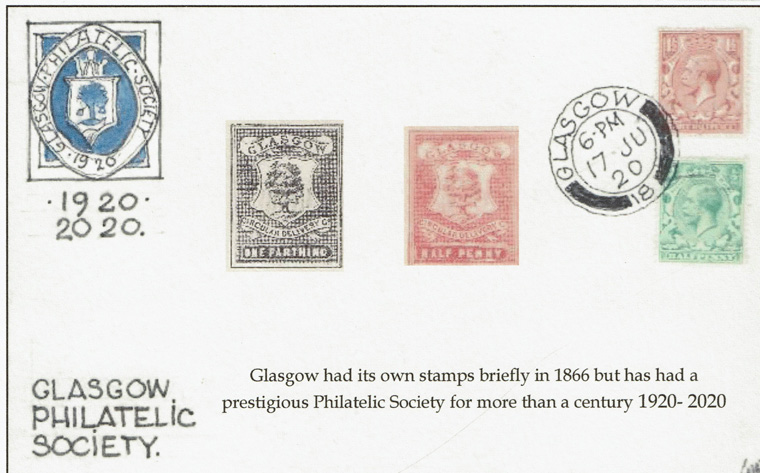
To further celebrate the centennial a lunch with invited displays from many of the Philatelic Societies in Scotland was held on 16th April 2024 in the Glasgow Grosvenor Hotel.
Glasgow PS were quite active in exhibitions either on their own or as invited exhibitions for larger celebrations. It is worth recording these and many of the covers produced are shown below.
Annual Exhibitions
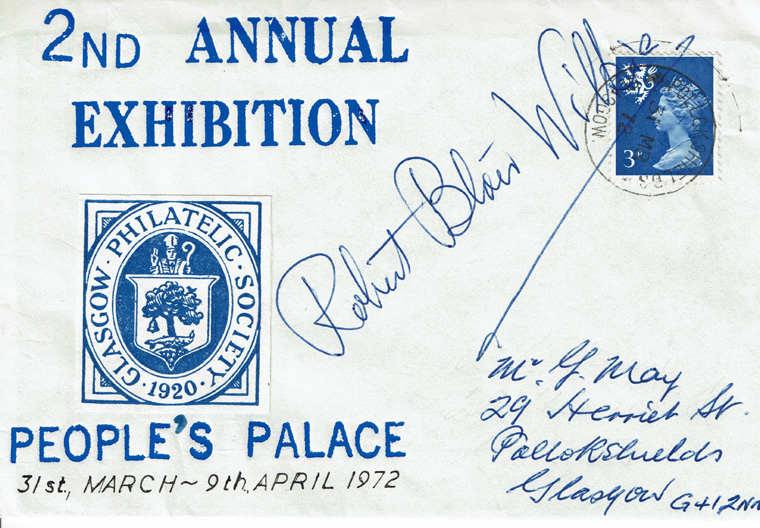
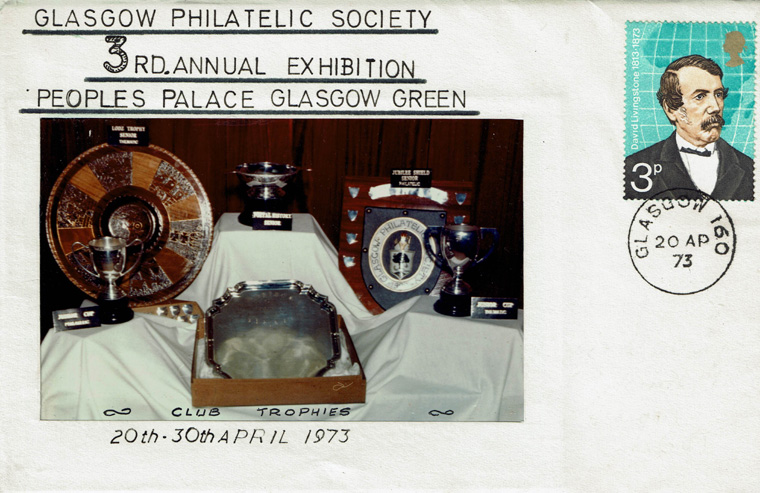
In the halycon days when there were lots of members there was an intention to run annual exhibitions. Covers from the 1972 and 1973 exhibitions are shown. They were held in the People’s Palace. The 1972 cover depicts the Glasgow PS Crest and the 1973 cover shows some of the Society’s trophies. It appears that this did not last long, although Glasgow PS did participate in several exhibitions in succeeding years.
Clyde’76 and Clyde’77
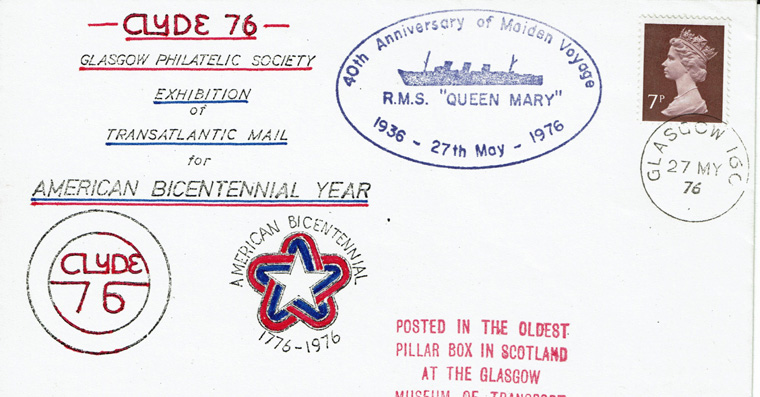
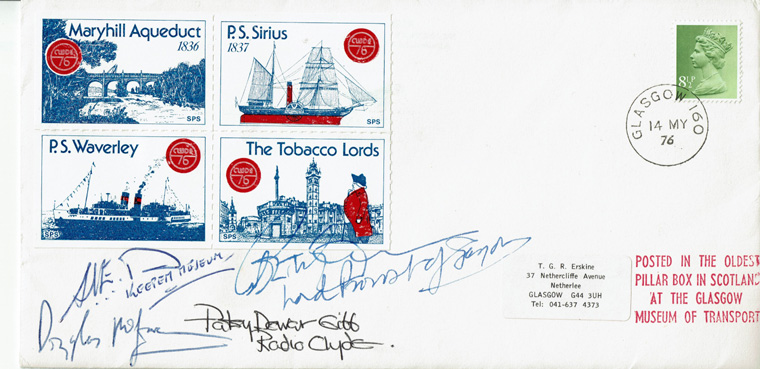
Radio Clyde sponsored the CLYDE ’76 and CLYDE ’77 festivals in Glasgow. In 1976 it was the Bi-centennial of American Independence and Glasgow Philatelic Society provided an exhibition telling the story of Trans-Atlantic Mail Transport, entitled “ACROSS THE ATLANTIC”, in the Glasgow Museum of Transport from 4th to 30th May 1976.he exhibition was split into 4 sections:
- Historical - the history of the United States as told by stamps and old letters.The connections between Scotland and the United States were highlighted with special reference to the Tobacco Trade with an exhibit on Tobacco on stamps.
- Sea Mail - many letters carried on ships were shown including one on the “Sirius”, which was the first vessel to cross the Atlantic under her own steam all the way. A cover “Posted in the Oldest “Pillar Box in Scotland” has a special cachet commemorating the 40th anniversary of the maiden voyage of “RMS Queen Mary” and labels produced for the exhibition.
- Air Mail - in the air mail section there were many items carried in both directions across the Atlantic. Included was an interesting exhibit featuring the development of aviation in Scotland.
- Aspects of US Philately. - included were some areas of specialisation. An exhibit of independant mail carriers including the famous name Wells Fargo.and studies of individual stamps, postal stationery and modern printing methods.
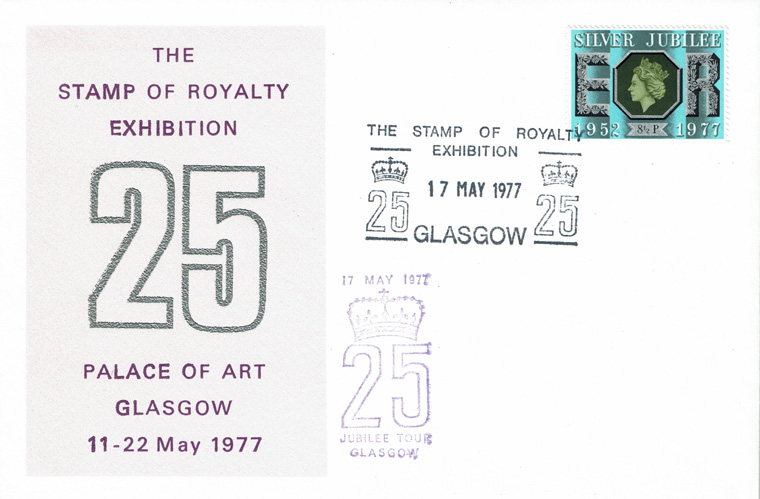
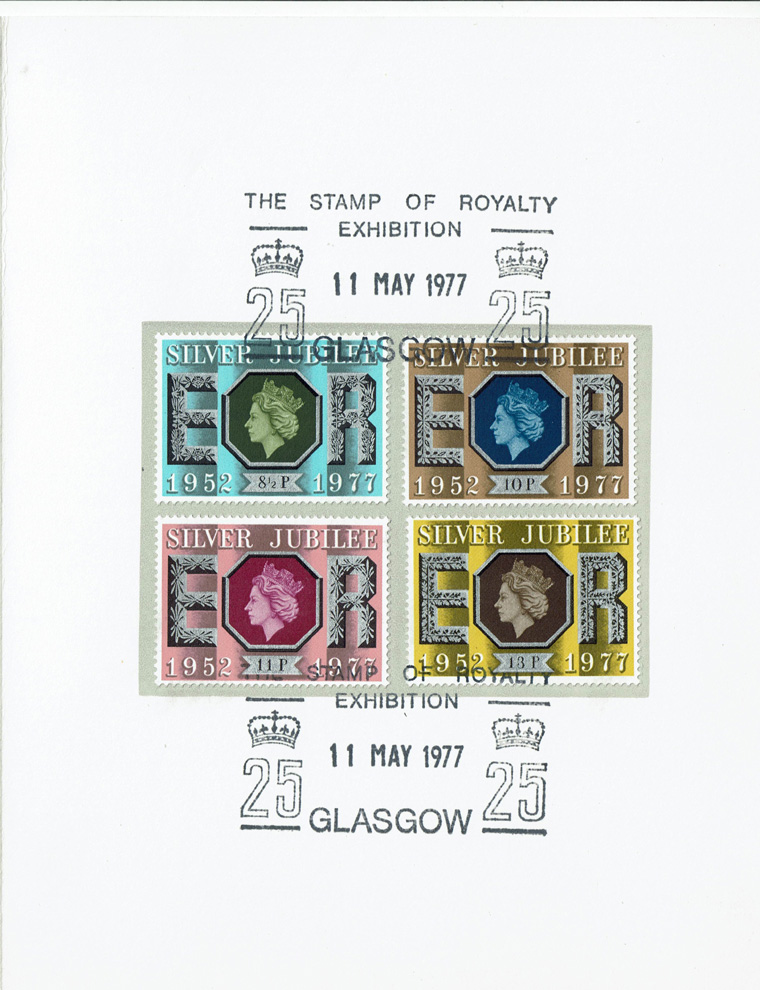
As part of Clyde ‘77 there were also celebrations for the Silver Jubilee of Queen Elizabeth II and Glasgow Philatelic Society mounted an exhibition in the Palace of Art entitled “The Stamp of Royalty”. A souvenir cover is shown with a cachet for the Royal Visit to Glasgow. Also shown os the inner of a special card with the four G.B. Silver Jubilee stamps with the exhibition postmark.
The exhibition was well attended and it is recorded that a total of 16,694 people attended over the 16 days.
Glasgow 800
1975 was the 800th anniversary of the granting of the Burgh Charter by King William the Lion. To mark this event the Glasgow Philatelic Society presented a major exhibition in Kelvingrove Museuem and Art Gallery, devoted to the Postal History of Glasgow. Special souvenir envelopes and handstamps were produced with a different handstamp each day. In 1844 numerical postmarks were introduced and this cover shows number 159 which was Glasgow’s number. In 1855 a new experimental type was introduced which combined the number and a date stamp – known as a Duplex. A few years later a roller cancellation came into use and it is type that is incorporated in the handstamp.
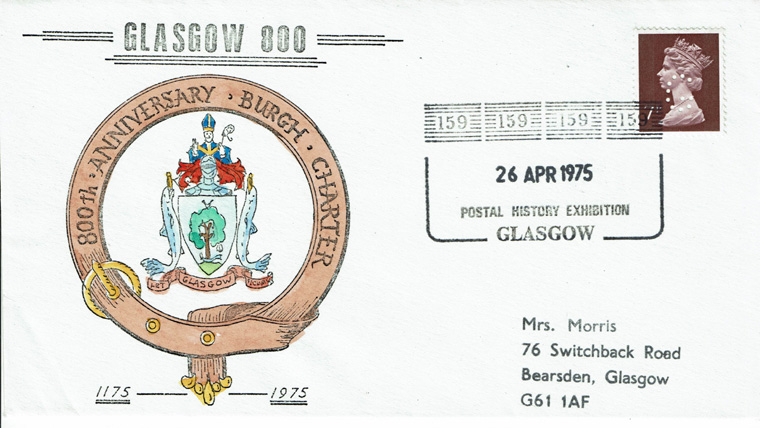
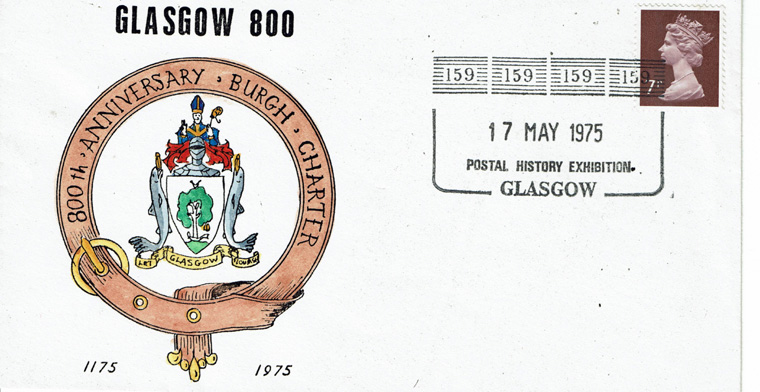
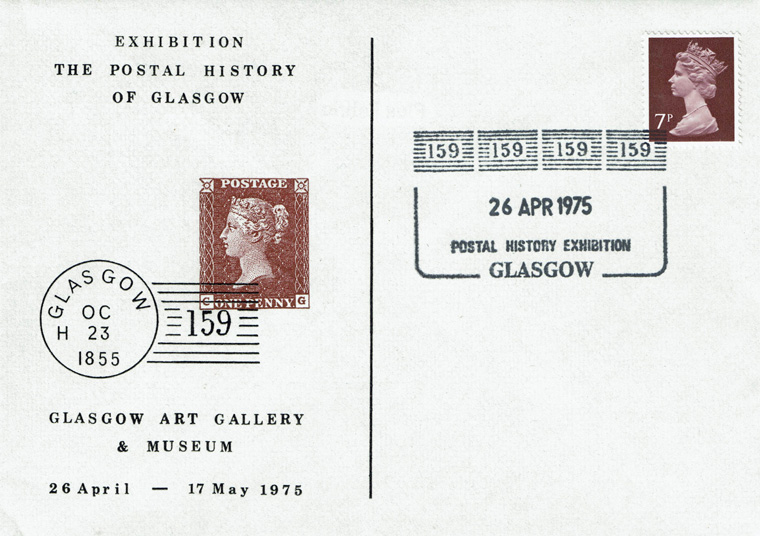
One of the highlights of the exhibition was collection of items from Monaco. Prince Rainier allowed some items from the Monaco Postal Archives to be displayed. Monaco had in the past issued a number of stamps for the Monte Carlo Rally. The 1955 issue for the 25th Rally had Glasgow University in its design, and the stamp for the 26th Rally showed a map of the complete route from Glasgow to Monaco. Prince Rainier had given permission for the loan of original artwork for these stamp designs and sheets of colour trials.
In the 1780s, communications between London and Glasgow was slow and went via Edinburgh. Glasgow Chamber of Commerce approached John Palmer of Bath, the Mail Coach Pioneer and Postal Reformer regarding a direct service about the possibility of commencing a direct service between London and Glasgow. The first Mail Coach arrived in Glasgow on 7th July 1788 to great acclaim. Normally on permenent display in the Museum in Bath, this handsome Mail Coach was loaned for the exhibition.
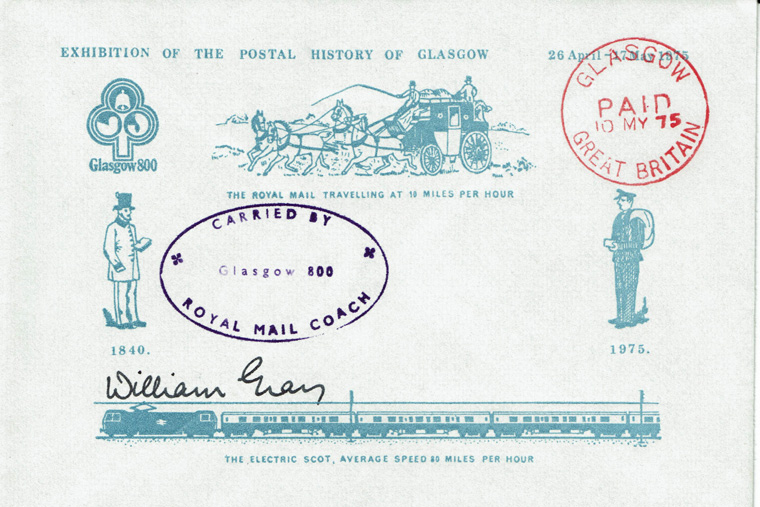
There were several cancellations produced including one with a cachet to commemorate the visit of Princess Margaret. A jumbo card illustrated the various postmarks used in Glasgow over the years:
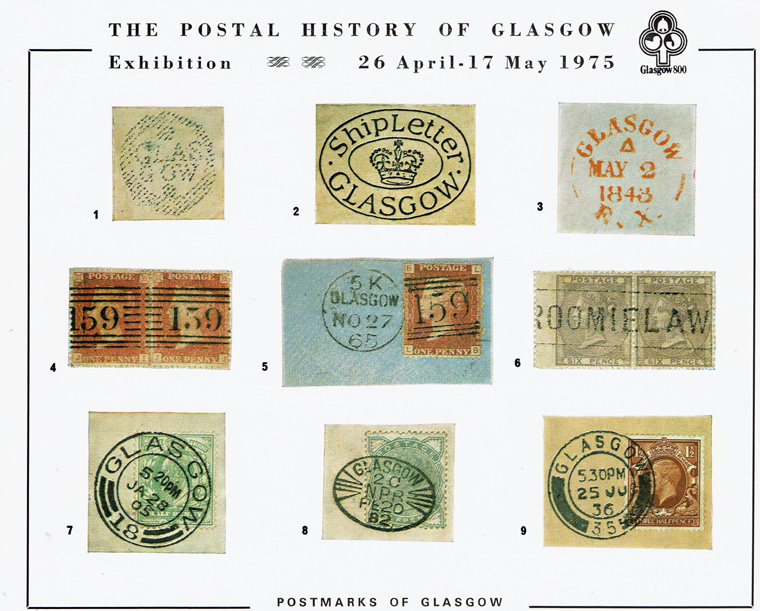
1 First Glasgow Woodcut 2 Glasgow Crown Ship Letter 3 Receiving house – Glasgow Exchange
4 Glasgow “Roller” 5 Duplex Cancellation 6 Scots Local Cancellation
7 Double Ring Numbered Cancel 8 Glasgow Newspaper Branch 9 Double Ring Numbered Cancellation with Solid Arcs
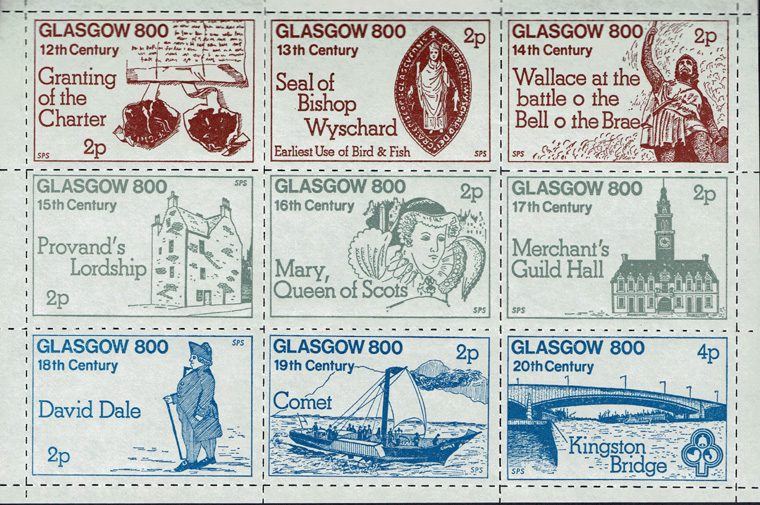
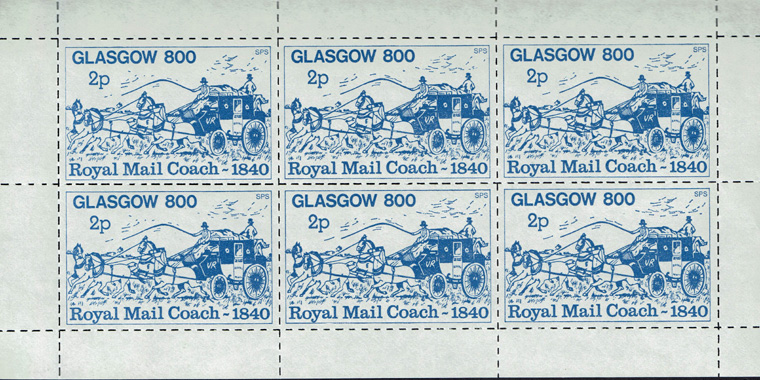
Two sheets of Commemorative labels were on sale at the exhibition. One showing significant aspects of each century from the 12th century to the 29th century and the second sheet showing the Royal Mail Coach from 1940. The Mail Coach led the Lord Provost’s procession from Kelvin Way to Glasgow Green via George Square. The design of the cover is based on the 1890 Jubilee of Penny Postage Envelope.
Volume 124 no. 9 of Stamp Collecting Weekly on April 24th 1975 was devoted to Glasgow 800 with several articles on postal history of Glasgow and the 1000th meeting of the Society.
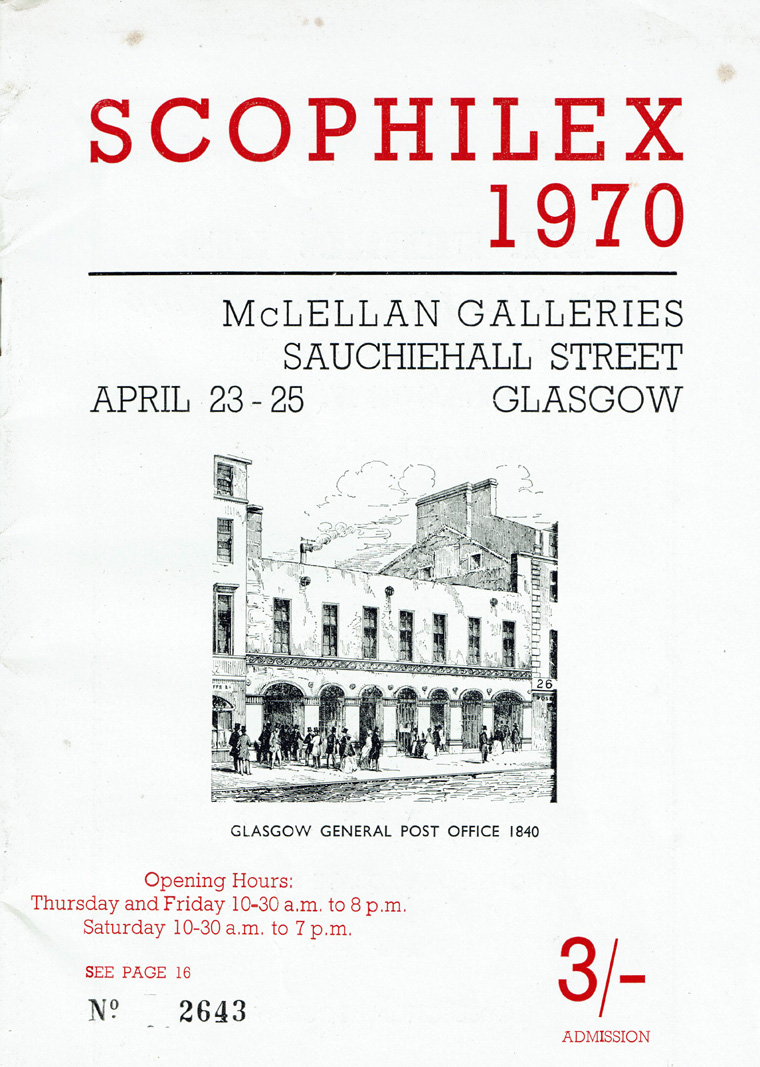
SCOPHILEX 1970
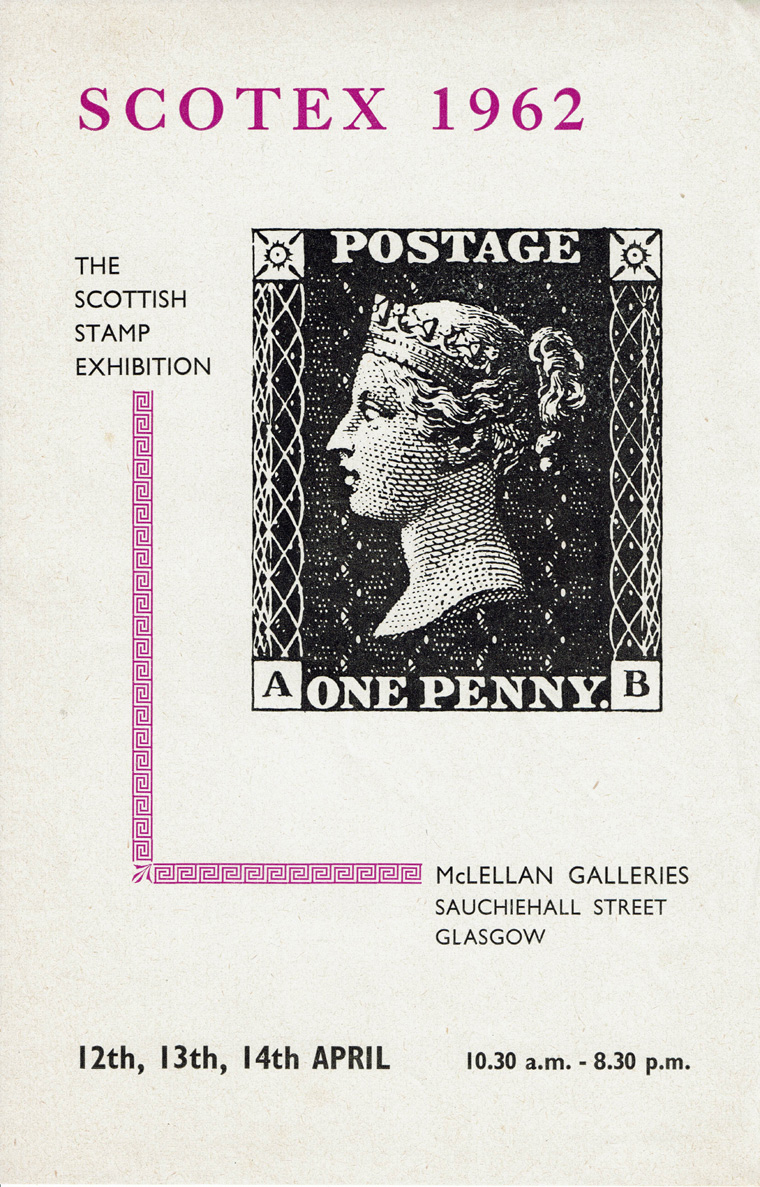
Glasgow Philatelic Society participated in two of the great Scottish Exhibitions, SCOTEX 1962 and Scophilex 1970.
There are always opportunities to have special commemorations as the cover celebrating the Bicentenary of Captain Cook’s discovery of the east coast of Australia on 2nd day of exhibition illustrates.
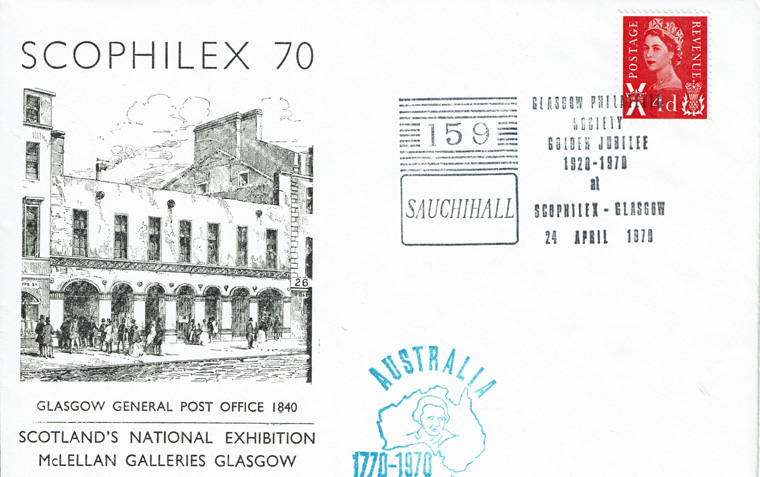
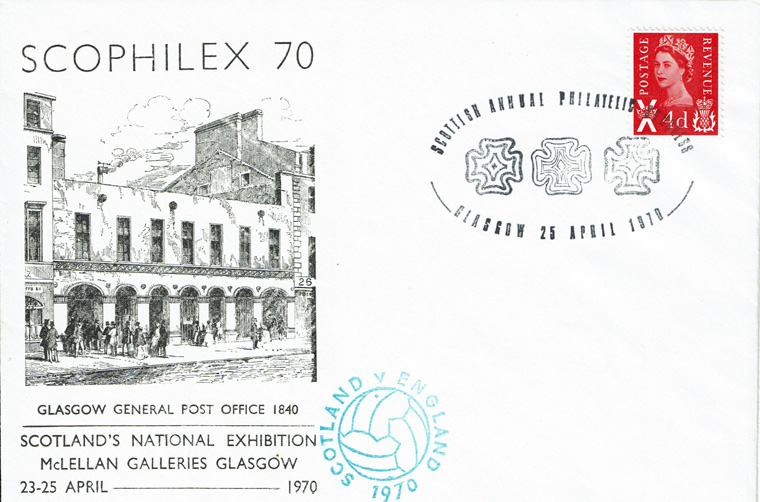
On view also were letters between Madeleine Smith and Pierre L’Angellier from the collection of Lord Clyde, the Lord Justice of Scotland. Of significance were the “Experimental Duplex” cancellations which have become known as the “Madeleine Smith’s”. The
Additional cachet on 3rd day of exhibition for Scotland v England football match at Hampden Park – the match ended in a 0-0 draw.
Palace of Art 1974
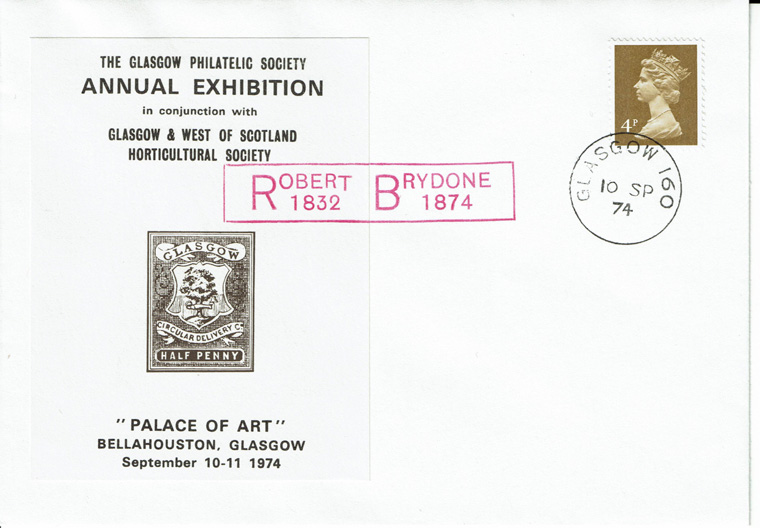
An exhibition in conjunction with the Glasgow and West of Scotland Horticultural Society was held in the Palace of Art in Bellahouston on September 10th and 11th 1974. The exhibition took place in the anniversary year of Robert Brydone who operated a “Circular Delivery” Service in Glasgow. An attractive souvenir cover commemorates this event. There were contained 5 separate sections:
- G.B. and Commonwealth.
- Foreign
- Postal History and Air Mail
- Thematic
- Court of Honour - displays of the winners of the Scociety’s annual trophy’s together with the trophies.
Museum of Transport
The museum of Transport was always a good place to hold exhibitions as their is a common link between transport and the mail.
Transport, The Philatelic Movement
On 6th and 7th June 1988 an exhibition was held in the Museum of Transport when it was relocated to the Kelvin Hall The cover is signed by Mr A Smith (Keeper of the Museum) and C Clayson (Assistant Keeper). The cover is a Benham Silk with a Silk showing the iconic tramcars in the Glasgow livery.
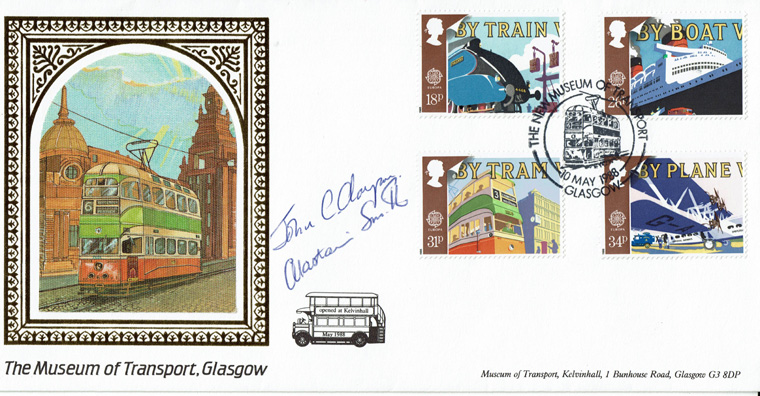
Glasgow Garden Festival 1988.
In conjunction with the Garden Festival in 1988, Glasgow Philatelic Society mounted an exhibition in the Museum of Transport as part of the Planet Earth exhibition. The cover is signed by George Chesworth the Director of the Garden Festival.
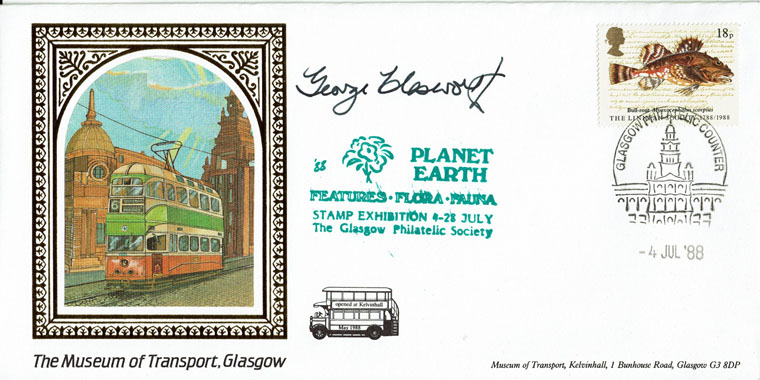
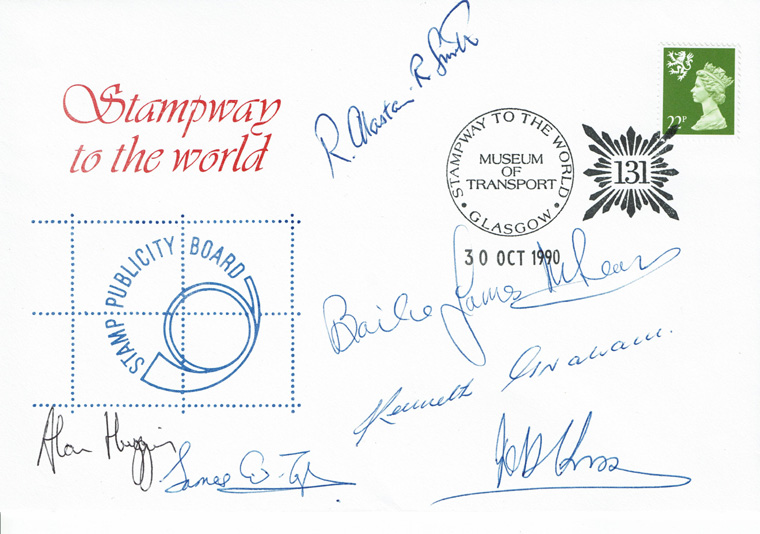
Stampway to the World
Another exhibition relating to transport and the postal systems, entitled “The Post in Scotland”, was held at the Museum of Transport in October 1990.
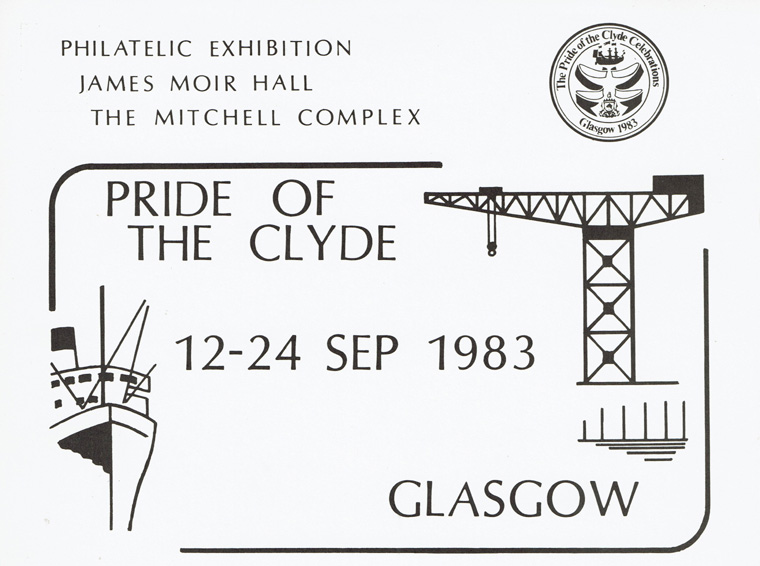
Pride of the Clyde
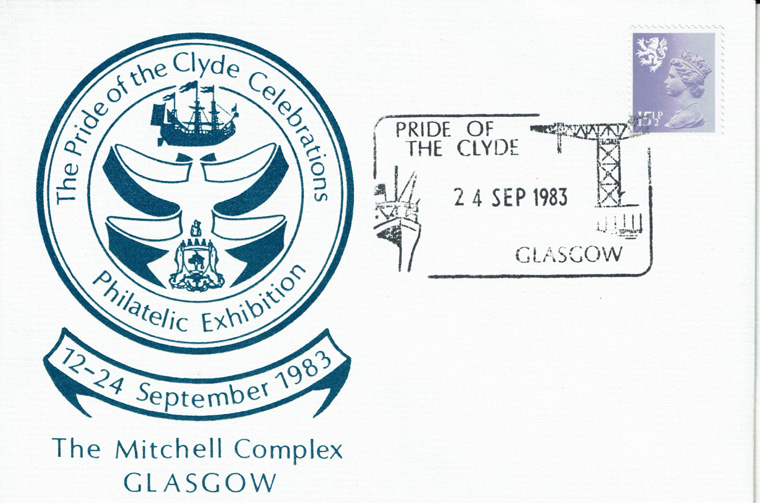
As part of the year long celebrations under the general title of “THE PRIDE OF THE CLYDE CELEBRATIONS”. Glasgow and surrounding area Philatelic Associations mounted an exhibition in the SECC form 12 – 24 September 1983. Focus was on telling the story of the river in all its aspects including people, wildlife, work and play, sport, arts, industry and transport. There were associated philatelic exhibits on the famous Madeleine Smith trial, Coats and Clydebank and its association with shipbuilding.
Hosting of ASPS Congress
On several occasions the Glasgow Philatelic Society hosted the annual congress of the Association. The Society was hosts in 1933, 1939, 1952, 1966, 1970 in association with Scophilex, 1980, and in 1995. Souvenir covers were produced from 1966 Congress onwards. .
The first Congress cover produced by Glasgow philatelic Society was in 1966. This showed Glasgow Cathedral

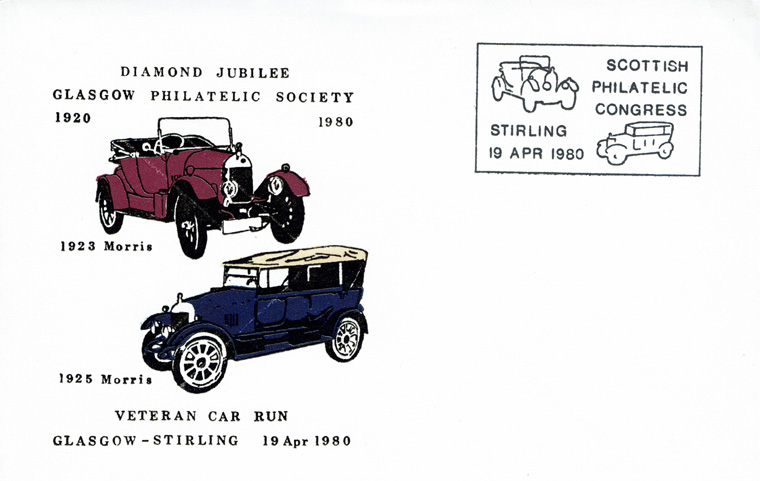
The 1980 Cover showed two Veteran Morris cars that took part in the Veteran Car run from Glasgow to Stirling. The cover highlights the Diamond Jubilee of Glasgow Philatelic Society.
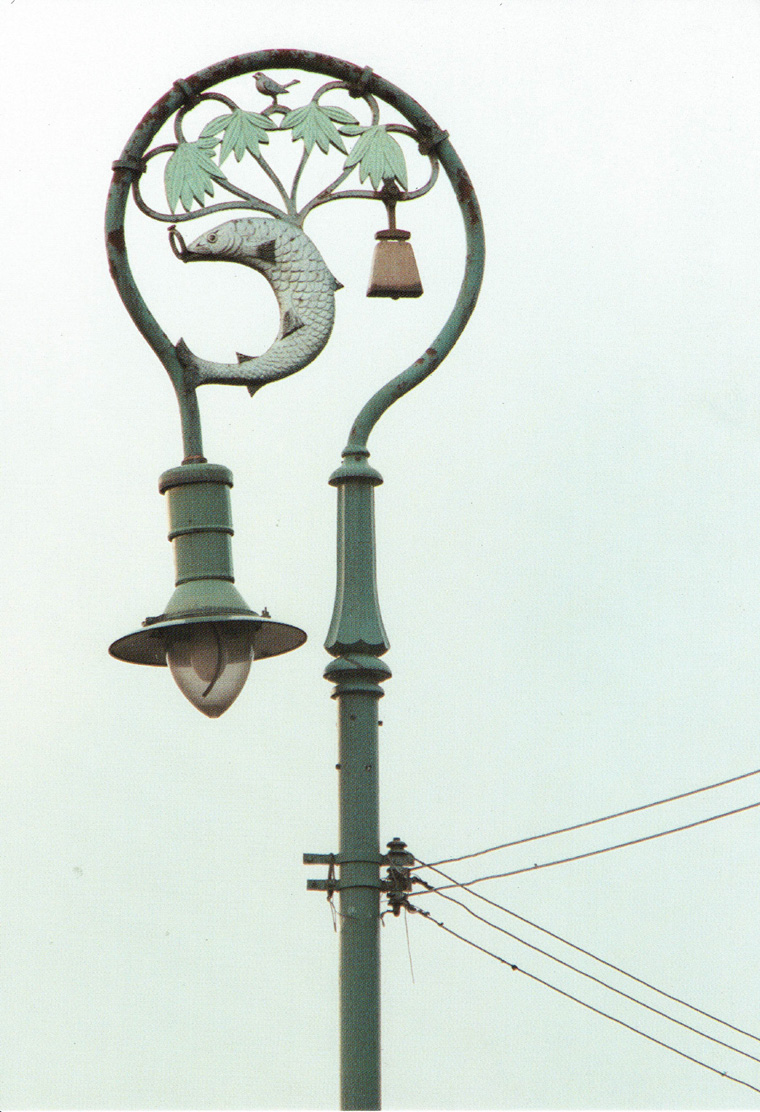
in 1995 the postmark was based on the Coat of Arms Old Gas Lamp in Cathedral Square in Glasgow to celebrate the 75th anniversary of Glasgow Philatelic Society.